


 By BARRY STRAUSS
Wednesday, April 17, 2013 – 5.00 pm – Moderator: Pres. Giuliano Amato
Centro Studi Americani – 32, via Michelangelo Caetani – 00186 Roma
Dr. Barry Strauss Professor of History and Classics at Cornell University and Author of The Spartacus War (New York: Simon and Schuster, 2009) will lecture on Spartacus’s legend and ironies on Wednesday, April 17 at the Centro Studi Americani in Rome. The lecture will be organized in collaboration with the Centro, the American Academy in Rome and The American University of Rome.
Extract
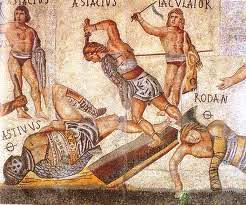
Spartacus led a revolt (73-71 BC) of gladiators and slaves that shocked Roman society at the time and that has echoed through the ages. He was a Thracian who served in an allied unit of the Roman army and who ended up unjustly enslaved and forced to be a gladiator in Capua. Most of his followers were rural slaves, especially shepherds. Most of them were foreigners, who had been brought to Italy in chains, or their descendants. A small number of free but impoverished Italians followed him as well. Spartacus was an excellent commander. The Romans were overextended abroad and had few soldiers in Italy. Spartacus took advantage of this situation to carry out raids on the farms of the wealthy throughout Italy, especially in the south. A man of liberal sentiments and strategic vision, he tried to rein in his soldiers’ urges for revenge and to convince them to leave Italy before the Romans could regroup and respond in force. He failed, on both accounts. In 71 BC, the wealthy oligarch Crassus broke the back of the revolt and fought a battle in which Spartacus was killed. Afterwards, Crassus conducted the brutal display of crucifying 6,000 of Spartacus’s followers on the road between Rome and Capua.
Although Spartacus and most of his followers were immigrants, ironically Spartacus has sometimes been a symbol of Italian nationalism as well as of regional identity in the Mezzogiorno. Spartacus was even cited as a freedom fighter by US President Ronald Reagan. The best known use of Spartacus as a symbol, however, has been as a symbol of socialism and communism. Marx and Lenin both praised Spartacus and he was a major figure in Soviet ideology. Spartacus sports clubs were — and are found the world over. It’s not surprising that Beppe Grillo too has compared himself to Spartacus (and quoted Dr. Strauss’s book).
Ironically, there is no evidence that Spartacus was opposed to slavery in principle. It’s much more likely that he was opposed rather to his own enslavement and that of his followers. Of course, he was also opposed to the Romans and their abuse of power — but not initially, when he fought for Rome. While we rightly honor Spartacus today for his rebellion against injustice, we should also remember the ironies.
OPEN LECTURE. Contact: Maurizia Garzia, President’s Office, AUR: m.garzia@aur.edu

Redazione
Inserito dai Redattori di "Vento nuovo". Quotidiano di informazione, cultura, innovazione, economia, arte, fashion, gossip, sport, fondato a Roma nel 2009 ( n. 43/2010)
Follow Me:

